Absolutely senseless, i mean the I94 has indefinite stay , i have often wondered the need to even issue it at approval , very sad times as we end the year, lets continue to spread good cheer and hope amongst ourselves, they have found a bogey man in asylum seekers.I understand. But we I don’t need a work authorization to work, how would they want to decrease the duration of it’s validity? This doesn’t make sense

You are using an out of date browser. It may not display this or other websites correctly.
You should upgrade or use an alternative browser.
You should upgrade or use an alternative browser.
Processing time for green card based on asylum
- Thread starter oliver_68
- Start date
As per google AI
Approved asylees do not need an EAD card to work, as their asylum status provides automatic work authorization. However, they often seek one to use as a convenient and universally accepted form of proof of employment eligibility with employers and for other purposes. An EAD can also simplify the process of getting other documents, and in some cases, it serves as a critical document for those who lack other forms of government-issued identification.
Why approved asylees get an EAD
How asylees can prove work authorization
Approved asylees do not need an EAD card to work, as their asylum status provides automatic work authorization. However, they often seek one to use as a convenient and universally accepted form of proof of employment eligibility with employers and for other purposes. An EAD can also simplify the process of getting other documents, and in some cases, it serves as a critical document for those who lack other forms of government-issued identification.
Why approved asylees get an EAD
- Proof of employment eligibility: While an asylee can work using their I-94 form or an unrestricted Social Security card, an EAD is often the most straightforward document to present to employers, who may be unfamiliar with or hesitant about accepting other proofs of work authorization.
- Identification: For asylees who may not have other government-issued identification, an EAD can serve as a form of photo ID for a variety of purposes.
- Automatic provision: Asylees are now automatically provided with an EAD when their asylum is granted at an Asylum Office.
- Avoiding difficulty: The EAD can help avoid the difficulty of convincing potential employers that their asylum status, rather than an EAD, is sufficient proof of authorization to work.
How asylees can prove work authorization
- EAD: An Employment Authorization Document (Form I-766) is a valid document for proving employment eligibility.
- Unrestricted Social Security card: Asylees are entitled to receive an unrestricted Social Security card. This, combined with a state-issued ID or driver's license, can be used to prove employment eligibility.
- Form I-94: A paper Form I-94 with an "Asylum Granted" stamp or notation is also acceptable proof of work authorization
How can you get stamped i94As per google AI
Approved asylees do not need an EAD card to work, as their asylum status provides automatic work authorization. However, they often seek one to use as a convenient and universally accepted form of proof of employment eligibility with employers and for other purposes. An EAD can also simplify the process of getting other documents, and in some cases, it serves as a critical document for those who lack other forms of government-issued identification.
Why approved asylees get an EAD
- Proof of employment eligibility: While an asylee can work using their I-94 form or an unrestricted Social Security card, an EAD is often the most straightforward document to present to employers, who may be unfamiliar with or hesitant about accepting other proofs of work authorization.
- Identification: For asylees who may not have other government-issued identification, an EAD can serve as a form of photo ID for a variety of purposes.
- Automatic provision: Asylees are now automatically provided with an EAD when their asylum is granted at an Asylum Office.
- Avoiding difficulty: The EAD can help avoid the difficulty of convincing potential employers that their asylum status, rather than an EAD, is sufficient proof of authorization to work.
How asylees can prove work authorization
- EAD: An Employment Authorization Document (Form I-766) is a valid document for proving employment eligibility.
- Unrestricted Social Security card: Asylees are entitled to receive an unrestricted Social Security card. This, combined with a state-issued ID or driver's license, can be used to prove employment eligibility.
- Form I-94: A paper Form I-94 with an "Asylum Granted" stamp or notation is also acceptable proof of work authorization
USCIS sends you stamped i94 once your asylum gets approvedHow can you get stamped i94
The package comes with
1. Asylum approval letter
2. I94
Then a separate package comes with EAD card under A-05 category

Adonirizz
Active Member
USCISI understand. But we I don’t need a work authorization to work, how would they want to decrease the duration of it’s validity? This doesn’t make sense
I dint get that one.USCIS sends you stamped i94 once your asylum gets approved
The package comes with
1. Asylum approval letter
2. I94
Then a separate package comes with EAD card under A-05 category
Misha-Benz
New Member
Let me ask you this, how do you know you’ve been granted asylum?I dint get that one.
A stamped I-94 is an extremely important document that you should make sure to have at hand. With that, you can get an unrestricted SSN and change that limited-term driving license that often gives away that one is not in a permanent immigration status such as LPR or USC.I dint get that one.
Well, the "limited term" notation is still dependent on the state. In Louisiana, for example, you still get the limited term notation even if you're a permanent resident green card holder. But yes, the asylum I-94 is important to get a permanent SSNA stamped I-94 is an extremely important document that you should make sure to have at hand. With that, you can get an unrestricted SSN and change that limited-term driving license that often gives away that one is not in a permanent immigration status such as LPR or USC.
Good afternoon, all.
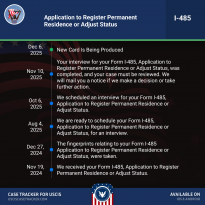
I wanted to share my timeline with you all. I feel this is a Win not only for me and my family, but also for the whole community. It is extremely good to see that even with more vetting, which is time consuming, USCIS keeps processing AOS based on asylum (I thought it might be a "Hold" or huge delay). I am from Colombia.
July 2024 - Asylum granted (Arlington, VA)
November 19, 2024 - USCIS received I485 (Including medicals).
December 27, 2024 - Biometrics.
August 4, 2025 - Ready to be scheduled for interview.
October 6, 2025 - Interview scheduled.
November 10, 2025 - Interview day. Case must be review.
December 6, 2025 - New Card is being produced.
Total time: 382 days.
I did prepare all the documents for me and my wife by my self. No lawyer involved. However, we decided to hire one to be present in our interview and "Just in case".
No WOM. No Congressman. No USCIS inquiries. Nothing.
I wish you all the best! Do not feel discouraged. Sometimes it could be overwhelming but keep doing everything right, follow the law, be a good citizen and keep praying to God.
I wanted to share my timeline with you all. I feel this is a Win not only for me and my family, but also for the whole community. It is extremely good to see that even with more vetting, which is time consuming, USCIS keeps processing AOS based on asylum (I thought it might be a "Hold" or huge delay). I am from Colombia.
July 2024 - Asylum granted (Arlington, VA)
November 19, 2024 - USCIS received I485 (Including medicals).
December 27, 2024 - Biometrics.
August 4, 2025 - Ready to be scheduled for interview.
October 6, 2025 - Interview scheduled.
November 10, 2025 - Interview day. Case must be review.
December 6, 2025 - New Card is being produced.
Total time: 382 days.
I did prepare all the documents for me and my wife by my self. No lawyer involved. However, we decided to hire one to be present in our interview and "Just in case".
No WOM. No Congressman. No USCIS inquiries. Nothing.
I wish you all the best! Do not feel discouraged. Sometimes it could be overwhelming but keep doing everything right, follow the law, be a good citizen and keep praying to God.
Attachments
Last edited:
Congratulations and amazing news. This is just what I was waiting for. Thank you for sharing. Good luck with your immigration journey.Good afternoon, all.
I wanted to share my timeline with you all. I feel this is a Win not only for me and my family, but also for the whole community. It is extremely good to see that even with more vetting, which is time consuming, USCIS keeps processing AOS based on asylum. I am from Colombia.
July 2024 - Asylum granted (Arlington, VA)
November 19, 2024 - USCIS received I485 (Including medicals).
December 27, 2024 - Biometrics.
August 4, 2025 - Ready to be scheduled for interview.
October 6, 2025 - Interview scheduled.
November 10, 2025 - Interview day. Case must be review.
December 6, 2025 - New Card is being produced.
Total time: 382 days.
I did prepare all the documents for me and my wife by my self. No lawyer involved. However, we decided to hire one to be present in our interview and "Just in case".
No WOM. No Congressman. No USCIS inquiries. Nothing.
I wish you all the best! Do not feel discouraged. Sometimes it could be overwhelming but keep doing everything right, follow the law, be a good citizen and keep praying to God.
Thank you! While we need to be realistic, also it doesn't mean be pessimistic. I think my testimony should fuel others with patience and positivism.Congratulations and amazing news. This is just what I was waiting for. Thank you for sharing. Good luck with your immigration journey.
Elshabani1
Member
Congratulations ... would you mind sharing the interview questions ? How was it?Good afternoon, all.
I wanted to share my timeline with you all. I feel this is a Win not only for me and my family, but also for the whole community. It is extremely good to see that even with more vetting, which is time consuming, USCIS keeps processing AOS based on asylum (I thought it might be a "Hold" or huge delay). I am from Colombia.
July 2024 - Asylum granted (Arlington, VA)
November 19, 2024 - USCIS received I485 (Including medicals).
December 27, 2024 - Biometrics.
August 4, 2025 - Ready to be scheduled for interview.
October 6, 2025 - Interview scheduled.
November 10, 2025 - Interview day. Case must be review.
December 6, 2025 - New Card is being produced.
Total time: 382 days.
I did prepare all the documents for me and my wife by my self. No lawyer involved. However, we decided to hire one to be present in our interview and "Just in case".
No WOM. No Congressman. No USCIS inquiries. Nothing.
I wish you all the best! Do not feel discouraged. Sometimes it could be overwhelming but keep doing everything right, follow the law, be a good citizen and keep praying to God.
Thanks,
Thank you!!! The interview lasted 45 minutes (Me and my wife together at the same time same questions). The officer just ask about i485. Personal information, current job, previous trip to the US, then the inadmissibility questions (YES/NO). Not a single question related to my Asylum Case.Congratulations ... would you mind sharing the interview questions ? How was it?
Thanks,
That's all.
Elshabani1
Member
Thank you so much..And I hope you all the best in your immigration journey and your life.Thank you!!! The interview lasted 45 minutes (Me and my wife together at the same time same questions). The officer just ask about i485. Personal information, current job, previous trip to the US, then the inadmissibility questions (YES/NO). Not a single question related to my Asylum Case.
That's all.
Congratulations, so happy for you and thank you for sharing it with us! Even brighter future aheadGood afternoon, all.
I wanted to share my timeline with you all. I feel this is a Win not only for me and my family, but also for the whole community. It is extremely good to see that even with more vetting, which is time consuming, USCIS keeps processing AOS based on asylum (I thought it might be a "Hold" or huge delay). I am from Colombia.
July 2024 - Asylum granted (Arlington, VA)
November 19, 2024 - USCIS received I485 (Including medicals).
December 27, 2024 - Biometrics.
August 4, 2025 - Ready to be scheduled for interview.
October 6, 2025 - Interview scheduled.
November 10, 2025 - Interview day. Case must be review.
December 6, 2025 - New Card is being produced.
Total time: 382 days.
I did prepare all the documents for me and my wife by my self. No lawyer involved. However, we decided to hire one to be present in our interview and "Just in case".
No WOM. No Congressman. No USCIS inquiries. Nothing.
I wish you all the best! Do not feel discouraged. Sometimes it could be overwhelming but keep doing everything right, follow the law, be a good citizen and keep praying to God.

Congratulations!!!! Ways to go with good newsGood afternoon, all.
I wanted to share my timeline with you all. I feel this is a Win not only for me and my family, but also for the whole community. It is extremely good to see that even with more vetting, which is time consuming, USCIS keeps processing AOS based on asylum (I thought it might be a "Hold" or huge delay). I am from Colombia.
July 2024 - Asylum granted (Arlington, VA)
November 19, 2024 - USCIS received I485 (Including medicals).
December 27, 2024 - Biometrics.
August 4, 2025 - Ready to be scheduled for interview.
October 6, 2025 - Interview scheduled.
November 10, 2025 - Interview day. Case must be review.
December 6, 2025 - New Card is being produced.
Total time: 382 days.
I did prepare all the documents for me and my wife by my self. No lawyer involved. However, we decided to hire one to be present in our interview and "Just in case".
No WOM. No Congressman. No USCIS inquiries. Nothing.
I wish you all the best! Do not feel discouraged. Sometimes it could be overwhelming but keep doing everything right, follow the law, be a good citizen and keep praying to God.
Congratulations! would you mind sharing which state you reside in or which field office processed your case?Good afternoon, all.
I wanted to share my timeline with you all. I feel this is a Win not only for me and my family, but also for the whole community. It is extremely good to see that even with more vetting, which is time consuming, USCIS keeps processing AOS based on asylum (I thought it might be a "Hold" or huge delay). I am from Colombia.
July 2024 - Asylum granted (Arlington, VA)
November 19, 2024 - USCIS received I485 (Including medicals).
December 27, 2024 - Biometrics.
August 4, 2025 - Ready to be scheduled for interview.
October 6, 2025 - Interview scheduled.
November 10, 2025 - Interview day. Case must be review.
December 6, 2025 - New Card is being produced.
Total time: 382 days.
I did prepare all the documents for me and my wife by my self. No lawyer involved. However, we decided to hire one to be present in our interview and "Just in case".
No WOM. No Congressman. No USCIS inquiries. Nothing.
I wish you all the best! Do not feel discouraged. Sometimes it could be overwhelming but keep doing everything right, follow the law, be a good citizen and keep praying to God.
Last edited:
Congratulations! Thanks for sharing the good news!Good afternoon, all.
I wanted to share my timeline with you all. I feel this is a Win not only for me and my family, but also for the whole community. It is extremely good to see that even with more vetting, which is time consuming, USCIS keeps processing AOS based on asylum (I thought it might be a "Hold" or huge delay). I am from Colombia.
July 2024 - Asylum granted (Arlington, VA)
November 19, 2024 - USCIS received I485 (Including medicals).
December 27, 2024 - Biometrics.
August 4, 2025 - Ready to be scheduled for interview.
October 6, 2025 - Interview scheduled.
November 10, 2025 - Interview day. Case must be review.
December 6, 2025 - New Card is being produced.
Total time: 382 days.
I did prepare all the documents for me and my wife by my self. No lawyer involved. However, we decided to hire one to be present in our interview and "Just in case".
No WOM. No Congressman. No USCIS inquiries. Nothing.
I wish you all the best! Do not feel discouraged. Sometimes it could be overwhelming but keep doing everything right, follow the law, be a good citizen and keep praying to God.
Johannita226
Active Member
CongratulationsThank you!!! The interview lasted 45 minutes (Me and my wife together at the same time same questions). The officer just ask about i485. Personal information, current job, previous trip to the US, then the inadmissibility questions (YES/NO). Not a single question related to my Asylum Case.
That's all.